
How Do Companies Handle Sign Manufacturing Projects
February 16, 2026
When talking about commercial signage, many business owners see only the finished product: a clean channel letter sign on a storefront, a bright LED sign along a highway, or a polished lobby logo inside an office building. What they do not always see is the structured sign manufacturing process behind it.
So, how do companies handle sign manufacturing projects from start to finish?
This guide explains each phase in detail, from consultation and design to fabrication, installation, and maintenance. If you are planning a commercial signs project, understanding this process will help you make informed decisions and avoid delays or unexpected costs.
Understanding the Scope of a Sign Manufacturing Project
Every sign manufacturing project starts with defining the scope. This step sets expectations, timelines, materials, and budget.
A professional sign company evaluates:
- The type of commercial sign required (monument signs, pylon signs, LED signs, channel letters, wall signs, directional signage)
- The installation location and environment
- Local zoning and permitting requirements
- Electrical needs for illuminated signs
- Brand guidelines and design standards
For example, an outdoor LED sign requires different materials and engineering than an interior acrylic lobby sign. Climate, wind load requirements, and building codes also change how signs are manufactured.
At LED Lights and Signs, projects begin with a structured assessment to ensure that fabrication, permitting, and installation align with local regulations and client goals.
Consultation and Project Planning
Client Discovery and Requirements
During the consultation phase, sign manufacturers gather detailed information about:
- Business branding and logo files
- Color specifications
- Desired visibility distance
- Lighting preferences (LED illumination, backlit, front-lit, halo-lit)
- Mounting surface (brick, concrete, metal panels, storefront glass)
This stage also includes budget discussion and timeline expectations. Clear planning reduces the chance of design changes later, which can increase production costs.
Site Surveys and Measurements
For many commercial signage projects, a site survey is conducted. This includes:
- Measuring the installation area
- Reviewing structural supports
- Identifying electrical access points
- Checking setbacks and height restrictions
Accurate site measurements ensure that the sign fits properly and meets safety and zoning standards.
Design and Engineering Phase
Once planning is complete, the project moves into sign design and engineering.
Graphic Design Development
Designers prepare digital renderings and scaled drawings. These visuals show:
- Font styles and spacing
- Logo placement
- Illumination effects
- Material finishes (aluminum, acrylic, steel, vinyl)
The goal is to create signage that reflects the brand while remaining readable from a distance.
For LED signs, designers also plan internal lighting layout, wiring paths, and brightness levels.
Engineering and Technical Drawings
Larger commercial signs, such as pylon signs or monument signs, require structural engineering. Engineers determine:
- Load-bearing requirements
- Wind resistance
- Mounting hardware
- Foundation depth for freestanding signs
These technical drawings are often required for permit applications and must comply with municipal building codes.
Permitting and Code Compliance
Permitting is a key part of sign manufacturing projects, especially for outdoor commercial signs.
Zoning Regulations
Local governments regulate:
- Sign size
- Height
- Illumination levels
- Placement distance from roads
- Digital display restrictions
Sign companies prepare documentation for city approval, including:
- Design drawings
- Site plans
- Structural calculations
- Electrical diagrams
Without proper permits, installation may be delayed or stopped. Professional manufacturers handle this process to ensure compliance and prevent fines.
Material Selection in Sign Manufacturing
Material choice affects durability, maintenance, and overall appearance.
Common Materials Used
Sign manufacturing typically involves:
- Aluminum for lightweight structural frames
- Acrylic for illuminated faces
- Polycarbonate for impact resistance
- Steel for structural support
- Vinyl for graphics and wraps
- LED modules for energy-efficient lighting
For exterior commercial signage, corrosion resistance and weather durability are important. Powder coating, protective sealants, and UV-resistant materials extend lifespan.
LED Technology Integration
Modern sign manufacturing frequently includes LED lighting systems. Compared to traditional neon or fluorescent lighting, LED signs offer:
- Lower energy consumption
- Longer lifespan
- Reduced maintenance
- Even brightness distribution
LED modules are installed inside channel letters, cabinets, or digital display panels depending on the project.
Fabrication and Production Process
Once designs are approved and permits secured, fabrication begins.
Cutting and Forming
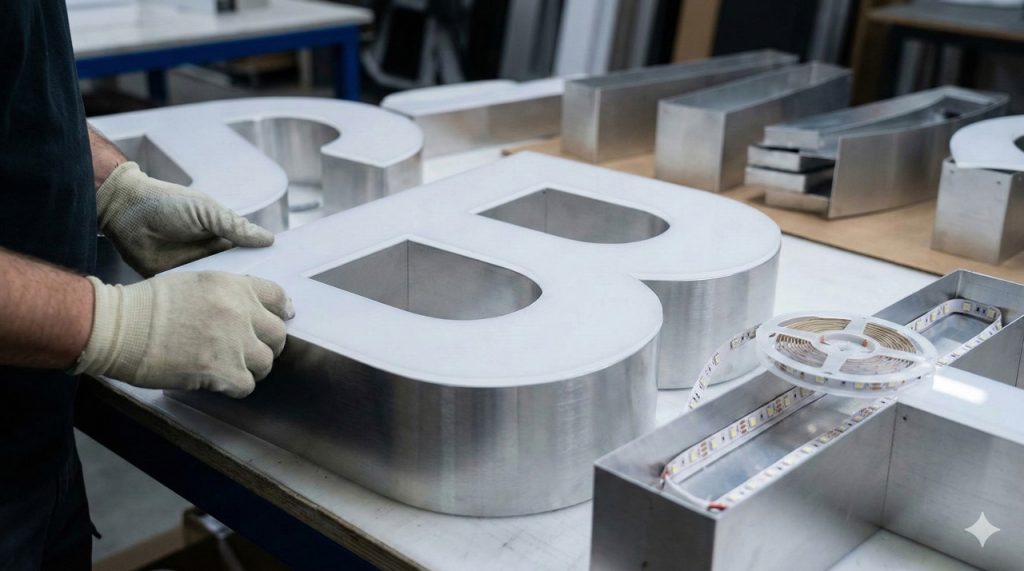
Using CNC routers, laser cutters, and bending equipment, manufacturers shape:
- Metal panels
- Acrylic faces
- Channel letter returns
- Structural components
Precision is important to ensure parts fit together during assembly.
Welding and Assembly
Structural elements are welded and assembled in a controlled facility. This includes:
- Framing cabinet signs
- Constructing monument sign structures
- Attaching mounting brackets
- Preparing internal wiring channels
Quality checks occur throughout the process to maintain consistency.
Painting and Finishing
Finishing processes include:
- Powder coating metal parts
- Applying vinyl graphics
- Installing acrylic faces
- Sealing edges against moisture
These steps protect the sign and ensure it matches brand color standards.
Electrical and Illumination Installation
For illuminated commercial signs, electrical integration is completed during fabrication.
Technicians install:
- LED modules
- Transformers or power supplies
- Wiring harnesses
- Timer systems or digital controllers
Testing is conducted before the sign leaves the manufacturing facility. This ensures proper brightness levels and consistent illumination.
Electrical compliance is checked to meet safety codes before installation.
Quality Control and Inspection
Quality control is built into each stage of sign manufacturing.
Manufacturers inspect:
- Structural stability
- Surface finish quality
- Lighting uniformity
- Graphic alignment
- Mounting hardware integrity
Testing prevents issues such as uneven illumination, loose wiring, or structural weakness.
By reviewing every detail before delivery, companies reduce the risk of installation problems.
Transportation and Logistics
Transporting commercial signs requires careful handling.
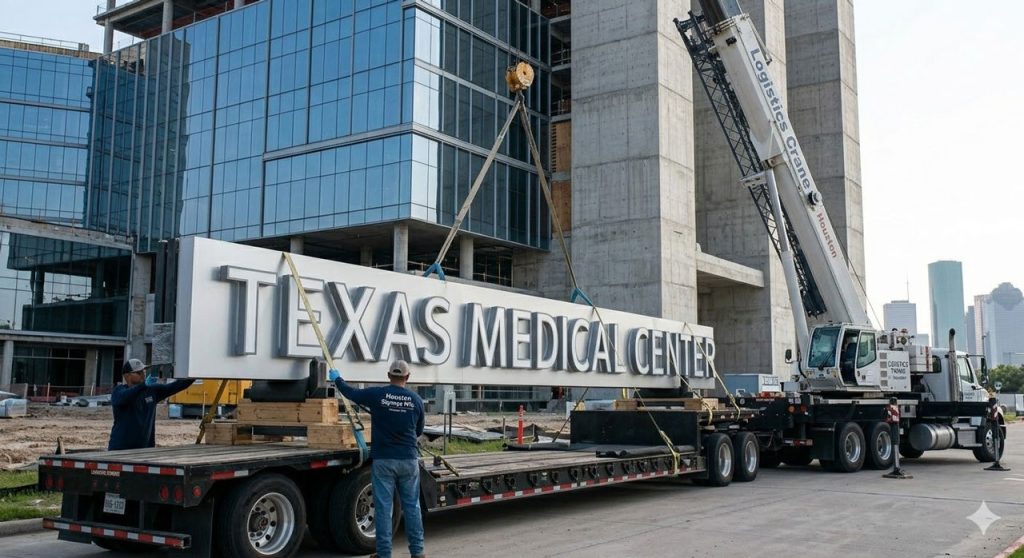
Large signs may be shipped in sections. Protective packaging prevents scratches and damage. For oversized structures like pylon signs, special transport equipment may be required.
Project managers coordinate delivery timing with installation crews to avoid site delays.
Professional Sign Installation
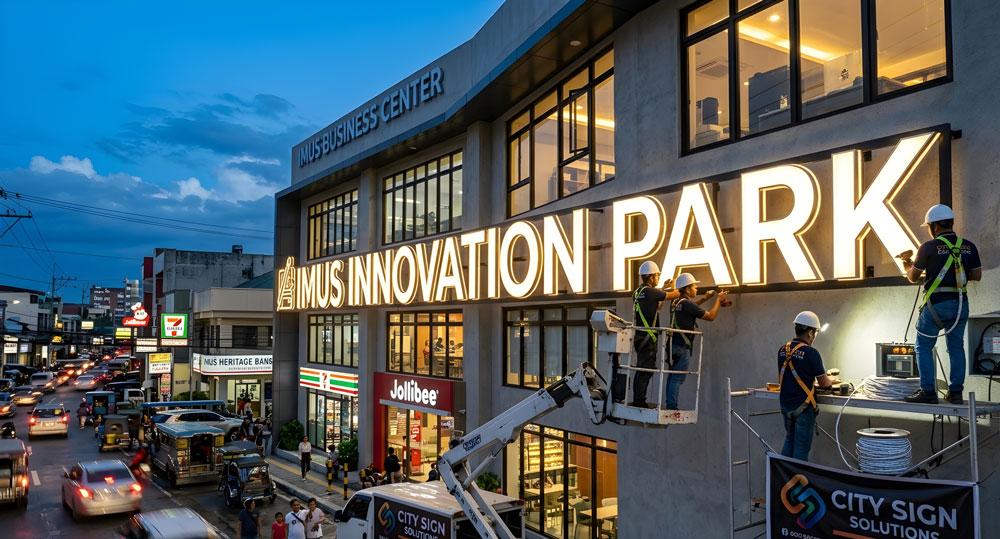
Installation is one of the most technical parts of a sign manufacturing project.
Mounting and Structural Setup
Installers:
- Secure brackets and anchors
- Lift signs using cranes or lifts
- Connect electrical systems
- Seal mounting points to prevent water intrusion
For monument signs, concrete foundations may need curing time before final assembly.
Electrical Connections and Testing
After mounting, electricians connect the sign to power sources and test illumination.
Final inspections ensure:
- Proper brightness levels
- Secure mounting
- Compliance with local codes
Only after passing inspection is the project considered complete.
Project Management Throughout the Process
Effective project management ties all stages together.
A sign manufacturing company typically assigns a project manager to:
- Coordinate design and engineering teams
- Monitor production timelines
- Handle permit communication
- Schedule installation
- Update clients on progress
Clear communication prevents misunderstandings and keeps commercial signage projects on schedule.
Maintenance and Long-Term Support
Sign manufacturing does not end with installation. Ongoing maintenance ensures longevity.
Routine Maintenance Services
Maintenance may include:
- LED module replacement
- Cleaning acrylic faces
- Electrical inspections
- Repainting or refinishing metal surfaces
- Updating vinyl graphics
Regular inspections can identify issues before they become expensive repairs.
Sign Repairs and Upgrades
Over time, businesses may change branding or relocate. In such cases, signs may need:
- Panel replacement
- Lighting upgrades
- Structural reinforcement
- Digital display updates
Working with an experienced manufacturer makes future updates more efficient.
How Companies Manage Timelines and Costs
Timelines vary based on:
- Permit approval duration
- Complexity of design
- Material availability
- Installation requirements
Simple wall signs may take a few weeks, while large pylon signs may take several months.
Cost factors include:
- Size and materials
- LED lighting systems
- Engineering requirements
- Installation equipment
- Permit fees
Transparent quoting helps businesses plan effectively.
Technology and Modern Sign Manufacturing Trends
The sign industry continues to evolve. Many manufacturers now use:
- CNC automation for precision cutting
- 3D rendering software for client previews
- Energy-efficient LED systems
- Digital signage with programmable displays
Digital signage allows businesses to change messaging without replacing physical structures. This flexibility has increased demand for electronic message centers and smart LED displays.
Why a Structured Process Matters
A structured sign manufacturing process improves:
- Compliance with zoning laws
- Structural safety
- Lighting efficiency
- Brand consistency
- Long-term durability
Skipping steps or working with inexperienced providers can lead to delays, rework, or code violations.
Companies like LED Lights and Signs follow a defined workflow to ensure each commercial sign meets regulatory standards and performance expectations.
Your Trusted Partner for Sign Manufacturing Near Addicks Park Ten
When your business needs high-quality sign manufacturing in Houston near Addicks Park Ten, choosing the right company makes all the difference. Your signage is often the first thing customers notice. It represents your brand, communicates your message, and supports long-term visibility. That is why working with an experienced, reliable sign manufacturer matters.
At LED Lights and Signs, we focus on delivering durable, professionally crafted commercial signs designed to perform in Houston’s climate and competitive market.
Local Expertise That Works for Addicks Park Ten Businesses
Addicks Park Ten is part of a growing Houston community where businesses compete for attention every day. Whether you operate a retail store, office, medical clinic, restaurant, or industrial facility, your signage must stand out while meeting local regulations.
We understand:
- Houston zoning and permitting requirements
- Local building codes and electrical standards
- Weather considerations such as heat, humidity, and storms
- Visibility needs along high-traffic corridors
Our team manages the entire process from design and engineering to fabrication and installation so your project stays organized and compliant.
Complete Sign Manufacturing Under One Roof
Choosing LED Lights and Signs means you are working with a full-service sign manufacturing company. We do not outsource critical steps. This allows us to maintain consistent quality control and meet project timelines.
Our services include:
- Custom LED signs
- Channel letter signs
- Monument signs
- Pylon signs
- Cabinet signs
- Interior lobby signs
- Building signage and wall signs
Every project starts with detailed planning and ends with professional installation. We handle permitting, structural considerations, electrical integration, and final inspections.
High-Quality Materials and Advanced LED Technology
Sign manufacturing is not just about appearance, it is about performance and durability.
We use:
- Aluminum and steel for structural strength
- Weather-resistant finishes and powder coatings
- Energy-efficient LED modules
- Precision-cut acrylic and polycarbonate faces
Our LED lighting systems provide consistent brightness, lower energy use, and longer lifespan compared to traditional lighting. This means reduced maintenance and better long-term value for your business.
Customized Design That Reflects Your Brand
Your business is unique. Your signage should reflect that.
Our design team works closely with you to create signage that aligns with your branding, logo standards, and marketing goals. We provide detailed renderings so you can see exactly how your sign will look before fabrication begins.
We focus on:
- Clear readability from a distance
- Proper sizing and placement
- Balanced illumination
- Professional color matching
The result is signage that strengthens your identity and supports customer recognition.
Reliable Project Management from Start to Finish
Sign manufacturing projects can become complicated without proper coordination. At LED Lights and Signs, we assign experienced project managers to oversee every stage.
You can expect:
- Clear communication
- Defined timelines
- Permit tracking
- Production updates
- Coordinated installation scheduling
We keep your project moving forward without unnecessary delays.
Professional Installation in Houston
Proper installation is just as important as fabrication. Our trained installation crews ensure that your sign is securely mounted, electrically connected, and compliant with city regulations.
We use professional equipment for safe lifting and secure mounting, especially for larger structures like monument and pylon signs near Addicks Park Ten.
Before completion, we perform final testing to confirm:
- Illumination consistency
- Structural stability
- Code compliance
Long-Term Support and Maintenance
Our relationship does not end after installation. We offer ongoing maintenance and repair services to keep your signage looking and functioning at its best.
From LED replacements to structural updates and rebranding adjustments, we help protect your investment over time.
Why Businesses Near Addicks Park Ten Choose LED Lights and Signs
Businesses in Houston choose us because we provide:
- Local expertise
- Full-service sign manufacturing
- Energy-efficient LED solutions
- High-quality materials
- Clear communication
- Professional installation
- Long-term support
We combine technical precision with practical experience to deliver signage that supports your business growth.
Ready to Start Your Sign Manufacturing Project near Addicks Park Ten?
If you are looking for dependable sign manufacturing in Houston near Addicks Park Ten, LED Lights and Signs is ready to help. Whether you need a new LED sign, monument sign, or complete building signage solution, our team is prepared to guide you from concept to completion.
Contact LED Lights and Signs today to discuss your project and take the next step toward stronger brand visibility.
LED Lights and Signs Serving the Addicks Park Ten Community and Beyond in Houston
LED Lights and Signs is dedicated to serving the diverse needs of the local community of Houston, including individuals residing in neighborhoods like Addicks Park Ten. With its convenient location near landmarks such as the Wolverine Power Systems LLC and major intersections like Addicks Dam Rd. and Addicks Satsuma Rd. (coordinates: 29.795705898491207, -95.6567199887438), we offer sign manufacturing Houston services.
Get Sign Manufacturing Services At Addicks Park Ten Now
Navigate from Addicks Park Ten to LED Lights and Signs Now
Final Thoughts
When asking how companies handle sign manufacturing projects, the answer lies in structured planning, professional design, regulated fabrication, and precise installation.
From consultation and engineering to LED integration and quality control, each stage plays a role in delivering durable and compliant commercial signage.
If you are considering a new commercial sign, take time to:
- Define your branding goals
- Understand local zoning requirements
- Choose materials suited for your environment
- Plan for maintenance and future updates
Sign manufacturing is both a technical and strategic process. When managed properly, it results in signage that supports brand visibility, customer engagement, and long-term value.
By understanding how the process works, businesses can make informed decisions and select a manufacturing partner that delivers reliable results from concept to installation.
FAQs
1. What Are the Main Steps in a Sign Manufacturing Project?
A sign manufacturing project typically follows a structured process that includes consultation, site survey, design development, engineering, permitting, fabrication, installation, and final inspection. Companies begin by understanding branding and location requirements, then create technical drawings and secure permits. After approval, the sign is fabricated using selected materials and installed by trained professionals.
2. How Long Does the Sign Manufacturing Process Take?
The timeline depends on the type and complexity of the commercial sign. Simple wall signs may take a few weeks, while large monument signs or pylon signs can take several months. Permit approval, engineering requirements, material availability, and installation logistics all influence the overall schedule.
3. What Materials Are Commonly Used in Commercial Sign Manufacturing?
Sign manufacturers commonly use aluminum, steel, acrylic, polycarbonate, vinyl graphics, and LED lighting components. Aluminum is often chosen for lightweight durability, while LED modules provide energy-efficient illumination. Material selection depends on whether the sign will be installed indoors or outdoors and the environmental conditions it will face.
4. Why Is Permitting Important in Sign Manufacturing Projects?
Permitting ensures that commercial signs comply with local zoning laws, building codes, and electrical regulations. Cities often regulate sign size, height, placement, and illumination levels. Without proper permits, installation may be delayed or require changes. Professional sign companies handle documentation and approvals to avoid compliance issues.
5. Do Sign Manufacturing Companies Provide Maintenance After Installation?
Yes, many sign manufacturing companies offer ongoing maintenance and repair services. This may include LED replacement, electrical inspections, cleaning sign faces, repainting, or updating graphics. Regular maintenance helps extend the lifespan of the sign and ensures it continues to operate safely and effectively.

Recent Blogs
How To Install Custom Signs Properly
Installing custom signs might seem like a simple task, but it involves careful planning, precise measurements, and the right tools. A sign isn’t just decoration, it’s a silent salesperson, representing your brand, guiding customers, and creating an impression. Improper installation can make your sign look unprofessional, cause damage, or even pose safety risks. This guide…How To Place Retail Signs For Maximum Visibility
Placing retail signs isn’t just about putting up a poster or a banner. A well-placed sign can guide customers, boost sales, and make your store impossible to ignore. In Houston’s competitive retail market, the way you position your signage can be the difference between foot traffic that flows past your store and shoppers who stop,…What Industries Use A Sign Company Most Often
Signs are one of the oldest forms of marketing, but they are still among the most effective tools a business can have. Think of a business without a sign, it’s like a hidden treasure nobody knows about. A sign doesn’t just identify a business; it communicates your brand, personality, and professionalism instantly. In a bustling…
Free Phone Consultation
Explore our range of High-quality signage solutions tailored just for you. From eye-catching LED displays to elegant custom signs, we’ve got you covered. Plus, take advantage of our FREE PHONE CONSULTATION to discuss your needs and get started today! Simply reach out to us by dialing (281) 235-3242.
